Sandal Strap Hack: Restore Shape with a Towel!
There is a specific kind of disappointment that comes with reaching for your favorite pair of leather sandals only to find them looking defeated.
Instead of the proud, arched straps that once invited your feet to slide in, you see limp pieces of leather laying flat against the footbed.
They look tired, they look old, and they make a premium piece of footwear look like a disposable item.
Most people look at a collapsed strap and assume the leather has reached its expiration date.
They believe the fibers have stretched beyond the point of no return and the only solution is a new purchase.
This is exactly the type of consumerist trap I want to help you avoid.
Leather is a remarkably resilient material, but it is also impressionable.
It holds the shape it was in while it was last wet or damp.
If you have been neglecting the structural integrity of your straps, you are letting gravity and moisture dictate the lifespan of your shoes.
The Science of Why Leather Straps Lose Their Shape
To fix the problem, you have to understand what caused the collapse in the first place.
Leather is composed of a dense network of collagen fibers that are held together by tanning agents and oils.
When those fibers are dry, they are stiff and brittle: when they are hydrated, they become flexible.
Every time you wear your sandals, your feet produce moisture and heat.
That sweat moves into the leather, lubricating those fibers and making them pliable.
When you kick the shoes off at the end of a long day, the leather is often still slightly damp and warm.
Gravity then takes over, pulling the straps down toward the sole.
As the leather dries in that collapsed position, the fibers reset and lock into that flattened shape.
Over months of repeated wear and neglected storage, the leather develops a memory of being flat.
The Common Mistake of Over Conditioning
When people notice their sandals looking "old," their first instinct is often to drench them in leather conditioner.
While hydration is important, too much conditioner can actually make the sagging problem worse.
Excessive oils can weigh down the leather and make it so soft that it can no longer support its own weight.
I see this frequently with high end sandals where the owner is trying to be diligent.
They apply thick layers of grease or oil, hoping to restore the original luster.
Instead, they end up with a strap that feels like a wet noodle.
The goal is not just to soften the leather, but to manage its internal moisture so that it dries in the correct orientation.
We are looking for a balance between flexibility and structural support.
This is where the towel method comes into play.
The Simple Brilliance of the Rolled Towel Hack
You do not need expensive shoe trees or specialized cobbler tools to fix this.
I have found that the most effective tool for restoring strap shape is sitting in your linen closet right now.
A simple hand towel or washcloth provides the perfect amount of tension and breathability.
A towel is superior to plastic inserts because it is adjustable.
You can roll it to the exact thickness of your foot, ensuring the strap is held at the precise height it will be when worn.
Furthermore, the cotton material helps wick away any excess moisture from the inside of the strap as it sets.
I have used this method on everything from heavy duty utility sandals to delicate leather slides.
The physics remain the same regardless of the brand or price point.
You are essentially performing a recalibration of the leather fibers.
How to Prepare Your Sandals for Reshaping
Before you stuff the shoes, you need to ensure the leather is prepared to be molded.
If the leather is bone dry, it will resist the new shape and might even develop micro cracks if forced.
I usually start by giving the straps a very light cleaning with a damp cloth to remove any salt buildup from sweat.
If the straps feel particularly stiff, I might apply a very light coating of a high quality conditioner.
I only use enough to make the leather feel supple, not greasy.
The goal is to make the fibers willing to move without making them heavy.
Once the leather is slightly damp or conditioned, it is ready to be manipulated.
This is the moment where you have the most influence over the future shape of the shoe.
Treat it like a sculpture that you are slowly bringing back to life.
A Step by Step Guide to the Towel Method
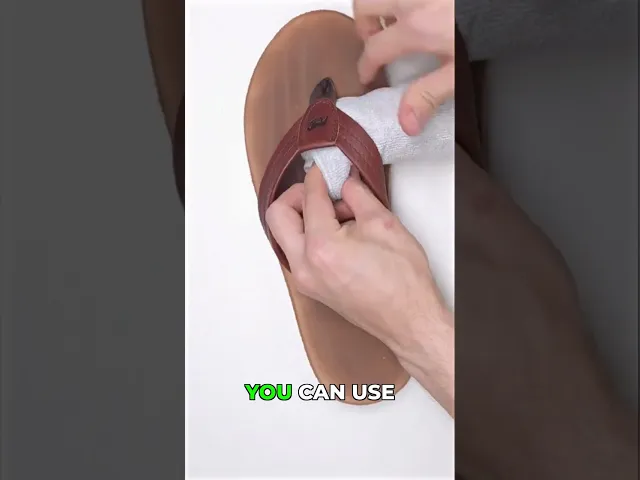
Start by taking a clean, dry hand towel and folding it in half lengthwise.
Begin rolling the towel tightly into a cylinder until it reaches a diameter that mimics the thickness of your foot.
You want the roll to be firm enough to provide resistance but soft enough to not distort the leather.
Slide the rolled towel into the sandal, pushing it forward until it sits directly under the straps.
If your sandals have multiple straps, you may need to use two smaller rolls or one large one that covers the entire bridge.
Ensure the straps are sitting naturally over the curve of the towel.
Check the tension of the straps once the towel is in place.
They should be taut but not stretched to the point of straining the stitching or the glue points.
The towel should be doing the work of holding the strap up so that gravity cannot pull it back down.
Managing the Drying and Setting Phase
Now comes the part that requires the most patience: the waiting.
You must leave the towels in place until the leather is completely dry and the fibers have "locked" into the new shape.
Depending on the humidity in your home, this can take anywhere from twelve to twenty four hours.
Do not be tempted to use a hair dryer or place the sandals near a radiator to speed up the process.
High heat is the enemy of quality leather, as it can cause the natural oils to evaporate too quickly.
This leads to shrinkage and brittle fibers, which is the opposite of what we want to achieve.
I recommend letting them sit in a cool, dry place with plenty of airflow.
If the towel feels damp after a few hours, you can swap it for a fresh, dry one.
This active wicking will help the leather set more effectively.
The Results of Consistent Structural Care
When you finally remove the towels, you should see a visible difference in the silhouette of your sandals.
The straps should stand on their own, creating that beautiful arch that makes the shoes look brand new.
Putting them on will be easier because you won't be fishing for a collapsed strap with your toes.
This is not just about aesthetics, though that is a significant benefit.
By keeping the straps shaped correctly, you are preventing the leather from folding and creasing in the same spot repeatedly.
Creases are where leather eventually fails and tears, so you are effectively extending the life of the shoe.
I view this as a form of stewardship.
We buy high quality goods because they are built to last, but they only last if we participate in their upkeep.
A ten minute intervention with a towel can save a pair of shoes that cost hundreds of dollars.
How to Prevent Your Straps from Collapsing Again
Once you have restored the shape, you want to make sure you do not have to do it every single week.
The easiest way to maintain the shape is to be mindful of how you store your sandals.
Try to avoid stacking them on top of each other in a crowded closet, which crushes the straps.
If you live in a particularly humid climate, your sandals will be more prone to losing their shape.
In these cases, I often keep a dedicated pair of rolled up socks or small towels nearby.
Slipping them into the shoes after a long day of wear takes five seconds and keeps the leather in peak condition.
Remember that leather is an investment in longevity.
The misinformation that leather is high maintenance often prevents people from buying quality goods.
In reality, the most effective care often involves the simplest tools and a little bit of common sense.
If this helped your leather, consider supporting Evumies. It is always free, and always will be. A small tip keeps the mission going: Support Evumies.
Watch the Full Video
See every step of this process in the video this post is based on.
Evumies Recommends
Products We’ve Tested & Trust
EVUMIES RECOMMENDED
Leather Honey Leather Conditioner
Keeps leather supple and crack-free — one coat lasts up to 6 months.
4.9
See on Amazon
EVUMIES RECOMMENDED
Bickmore Bick 4 Leather Care
Restores moisture to dried leather without darkening or leaving any residue.
4.7
See on Amazon
As an Amazon Associate, Evumies earns from qualifying purchases.