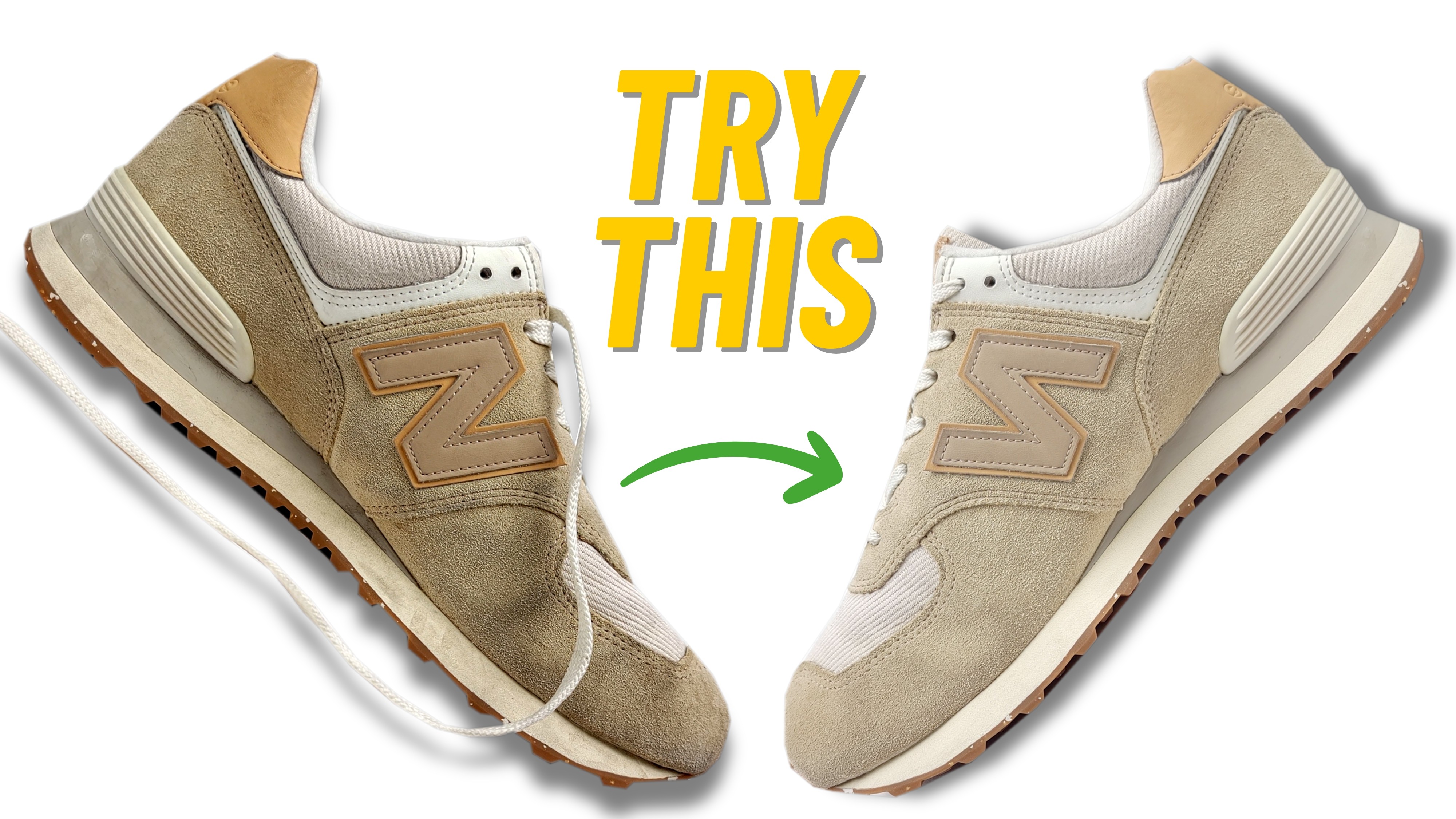
I Can't BELIEVE This Actually Worked! How I Removed DEEP Creases

Stop killing your boots the second you get home
You finally pulled the trigger on that beautiful pair of leather boots. They looked perfect in the box, and you felt like a million bucks wearing them out for the first time.
But then you get home, kick them off in the hallway, and leave them there until tomorrow. After a few weeks, you notice the heel is sagging, the leather looks dull, and deep creases are carving paths across the toes.
You feel like you've failed or that the boots weren't as high quality as you thought. You start to think that maybe leather is just too much work for a regular person to maintain.
I've been there, and I've felt that exact frustration. I once ruined a perfectly good pair of boots because I thought heat was the answer to drying them out, only to watch the leather shrink and crack before my eyes.
The truth is that you aren't the problem. The problem is that nobody tells you that the real damage doesn't happen on the street, it happens the moment you arrive at home.
I want to show you a simple five step system that costs less than a single trip to the cobbler. If you follow this, your leather will outlast everything else in your closet.
The silent killer of the boot heel
The first mistake most guys make happens before their foot even touches the ground. We've all done it: we're in a rush, so we force our foot into the boot, crushing the back of the shoe with our heel.
Inside that heel is a structural piece called a counter. Once you collapse that counter, it never fully recovers, and the shape of your boot is gone forever.
Evumies is free for everyone and always will be. I partner with brands I actually use, and buying through these links costs you nothing extra. You can save your heels with a simple Eagle Shoe Shine Brush Kit which often includes entry level tools, or any sturdy shoe horn you have lying around.
Using a shoe horn takes exactly one second. It protects the shape, and the shape of the boot is what determines its value in your eyes over the long haul.
Why your boots need a skeleton
Leather was once living skin. Just like your own skin, it is organic and porous, meaning it absorbs nearly every drop of perspiration from your feet throughout the day.
If you leave your boots sitting empty and damp, that moisture degrades the leather from the inside out. This is why you see boots that sag and crease in all the wrong places.
You need to give your boots their skeleton back the moment you take them off. Insert cedar shoe trees immediately, not the next day, and definitely not after they have already dried into a slumped position.
Evumies is free for everyone and always will be. I partner with brands I actually use, and buying through these links costs you nothing extra: Boot Shoe Trees.
Cedar is the most impactful tool in your arsenal because it does two things at once. It absorbs moisture and odor, while holding the leather in its correct anatomical shape so it dries without deep creases.
The ten second daily sweep
Most people skip this step because it seems too simple to matter. But dust and ambient grime act as a microscopic desiccant, which is just a fancy way of saying they suck the moisture right out of your leather.
Grime also acts like sandpaper in the creases of your boots. Every time you take a step, those tiny particles are grinding away at the leather fibers.
Take ten seconds to use a horsehair brush after every single wear. I never recommend synthetic brushes because I don't like supporting more plastic production, and horsehair is naturally porous, which helps move natural oils around for a better shine.
Evumies is free for everyone and always will be. I partner with brands I actually use, and buying through these links costs you nothing extra: Horse Hair Brush.
Use light to medium pressure and follow the grain of the leather. You cannot condition over grime, so this daily sweep is the foundation that makes every other care step actually work.
Erasing creases with an ancient tool
Over time, daily wear creates micro dents and small compressions in the leather fibers. Most people think they need more chemicals to fix this, but the real solution is mechanical.
Cobblers and soldiers have used a deer bone for centuries to smooth out these imperfections. A deer bone is naturally embedded with oils, which allows it to glide across the leather without leaving marks.
Before you start, apply a very thin layer of a high quality cream. This keeps the surface slick so the bone can do its work without creating friction heat that might damage the finish.
Evumies is free for everyone and always will be. I partner with brands I actually use, and buying through these links costs you nothing extra: Saphir Renavateur.
With your shoe tree inside the boot for resistance, work the bone in firm, deliberate strokes over the toe box. This physically realigns the fibers and compresses the creases back into a smooth surface.
Evumies is free for everyone and always will be. I partner with brands I actually use, and buying through these links costs you nothing extra: Deer bone Leather Tool.
This process is rhythmic and relaxing, almost like a form of meditation. Real leather is a gift because you can actually spend time honoring it and bringing it back to life, unlike cheap synthetic materials that just peel and end up in a landfill.
The supply chain drought
Here is a secret that most boot brands won't tell you. Even a brand new pair of boots might be the most neglected leather you own.
By the time a boot travels from the tannery to a warehouse and finally to your door, it may have been sitting for six months without any nourishment. I call this the supply chain drought.
This is why I always condition my leather on day one. I want to know exactly when the maintenance clock started so I'm never guessing about when they need a top off.
When you buy high quality leather, you're getting the benefit of fat liquoring. This is a process where the tannery pounds fats and oils deep into the hide during tanning to ensure long term suppleness.
But even the best fat liquored leather cannot regenerate its own moisture. You are the steward of this material now, and your job is to keep those fibers hydrated so they don't snap under the pressure of your daily walk.
You are ready to win
Caring for your leather isn't about being an expert or having a workshop full of expensive gear. It is about respect for the things you own and the world we live in.
We live in a culture that tells us to throw things away the moment they look slightly used. I’m telling you that 95% of leather problems can be fixed right at your kitchen table with a little patience.
If you use a horn to get in, trees to hold the shape, a brush to keep it clean, and a bone to smooth the wear, your boots will look better in five years than they do today.
Go grab those boots sitting in your hallway right now. Give them a quick brush and put those trees in: you've got this.
If this helped your leather, consider supporting Evumies. It is always free, and always will be. Even a small tip keeps the mission going: Support Evumies.