Russell Moccasin CEO Sent Me His Personal Boots
February 2025
When the CEO of Russell Moccasin sends you his personal boots, you do more than just clean them. You treat them as a masterclass in American craftsmanship and a testament to the endurance of quality materials.
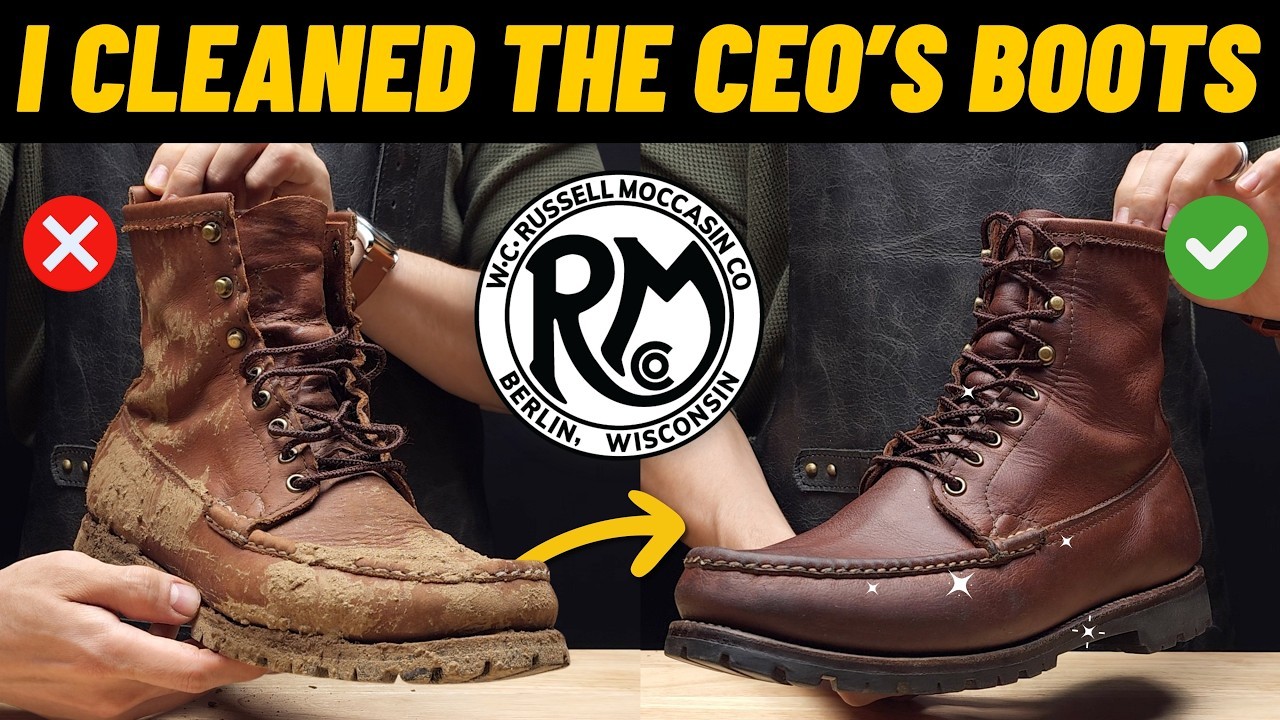
These boots arrived at my door carrying the weight of years of hard use. They were caked in mud, parched of oil, and looking every bit like a pair of shoes destined for the back of a closet or a donation bin.
This is where most people make a critical mistake. They see a worn out pair of boots and assume the leather has reached the end of its life cycle.
They view the cracks and the dullness as signs of decay rather than a simple plea for maintenance. In reality, leather is one of the most durable substances we have.
It is built to survive environments that would shred synthetic materials in weeks. The enemy is not the age of the boot or the miles walked in it.
The enemy is neglect and the steady stream of misinformation that suggests we should simply buy something new when things get dirty. I am here to tell you that these boots were just getting started.
The Destructive Nature of Dried Mud
The first thing I noticed about these Russell Moccasins was the layer of dried mud covering the uppers and the soles. This is not just a cosmetic issue.
Mud acts as a powerful desiccant. It sits on the surface and slowly pulls the natural oils and moisture out of the leather fibers.
If left long enough, the leather becomes brittle. This leads to the structural cracking that eventually ruins a perfectly good pair of footwear.
Most people try to scrub this off with a wet rag immediately. That is a mistake because it often pushes the grit deeper into the pores of the hide.
You need to understand the mechanics of the material before you start the restoration. You are working with a fibrous, organic structure that needs to breathe and remain flexible.
When mud hardens, it creates a rigid shell that prevents that flexibility. Neglecting to remove surface debris is the fastest way to kill a premium boot.
The Physical Extraction of Surface Debris
The restoration begins with the laces. You cannot properly clean or condition a boot if you are fighting against strings and eyelets.
Removing the laces gives me full access to the tongue and the gussets where dirt loves to hide. Once the boots were stripped, I reached for my horsehair brush.
This is the most underrated tool in any leather care kit. It is soft enough to avoid scratching the finish but firm enough to dislodge stubborn particles.
I started by knocking the large chunks of dried mud off the soles and the uppers. I spent a significant amount of time on the welt and the stitching.
Dust and grit act like sandpaper on the threads that hold your boots together. If you leave that grit in place, every step you take causes the thread to saw against the leather.
By the time I finished brushing, the boots already looked different. The heavy crust was gone, but the leather was still visibly thirsty and dull.
Deep Cleaning Without Stripping the Soul
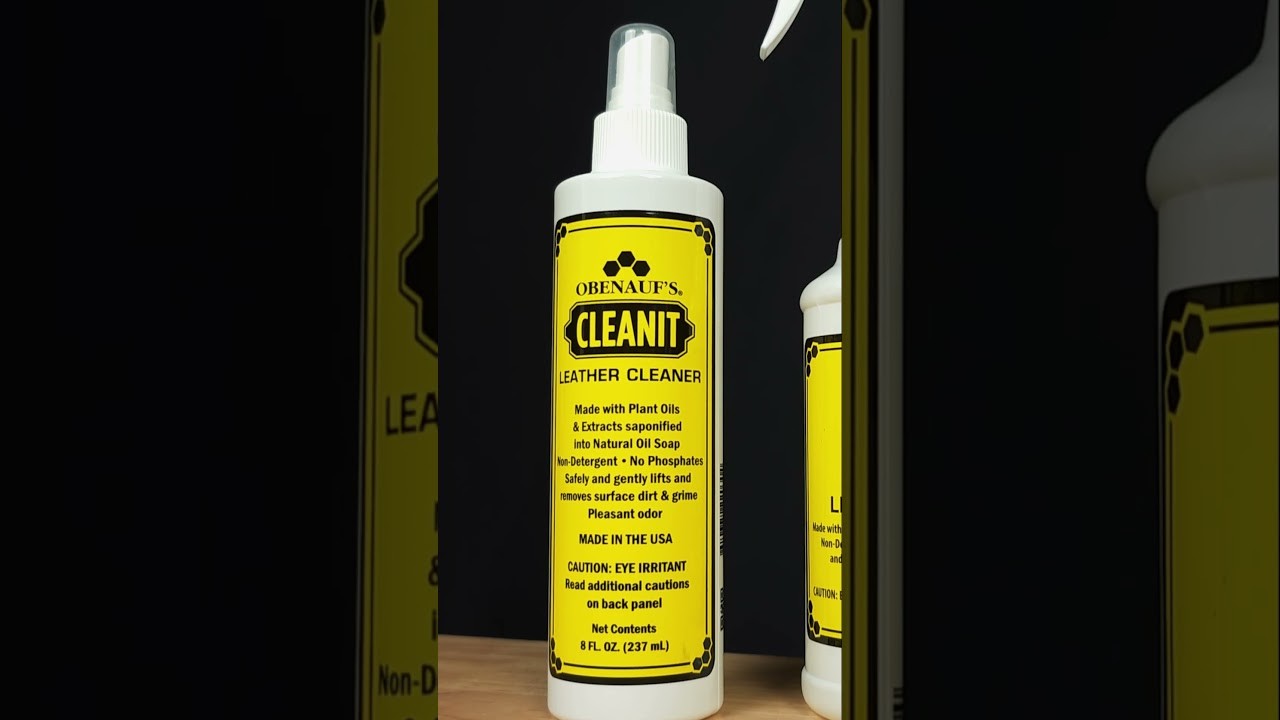
With the surface dirt handled, it was time to address the grime that had worked its way into the grain. I used Obenauf's Clean It for this stage of the process.
I prefer this specific cleaner because it is formulated to lift dirt without completely dehydrating the hide. I sprayed it onto the leather and watched as it began to emulsify the remaining gunk.
I used a clean cloth to wipe the surface, and the amount of residue that came off was staggering. Even after a thorough brushing, the leather was holding onto layers of old oils and environmental pollutants.
This is the part of the process that scares many beginners. The leather might look slightly darker or different when wet, but this is a necessary step to clear the path for nourishment.
You cannot condition dirty leather. If you apply oil over dirt, you are simply sealing the problem inside the boot.
The goal here is a clean slate. I worked in sections, ensuring that I didn't leave the cleaner to sit for too long on any one spot.
Reintroducing Life to the Fibers
Once the boots were clean and dry, they were ready for the most satisfying part of the restoration. The leather was clean, but it was also at its most vulnerable because it lacked protective oils.
I turned to Obenauf's Heavy Duty LP. This product is a blend of natural oils and waxes designed to provide long term protection and flexibility.
I do not use a brush or a sponge to apply this. I prefer to use my hands.
There is a practical reason for this beyond the tactile connection to the work. Your body heat helps melt the wax components of the conditioner.
This lowers the viscosity and allows the treatment to penetrate deep into the leather rather than just sitting on top. I took a small amount and began working it into the leather in circular motions.
You can feel the leather drinking it up. The color began to deepen and the suppleness returned almost instantly.
The Art of the Manual Application
Applying conditioner by hand allows you to feel the spots that need the most attention. You might notice the leather near the toes or the heel is particularly dry.
I paid special attention to the areas where the boot flexes. These are the high stress zones that are most prone to cracking if the leather is not properly hydrated.
The transformation was dramatic. The dull, dusty brown shifted into a rich, lustrous mahogany.
It is important not to overdo it. You want the leather to be saturated but not greasy.
After I worked the conditioner into every nook and cranny, I let the boots sit. This allows the oils to migrate through the fibers and the waxes to set on the surface.
Using your hands ensures that the wax melts into the grain for maximum protection. This creates a water resistant barrier that will protect the CEO's boots on his next outing.
Stewardship Over Consumption
Watching these Russell Moccasins come back to life reminds me why I started Evumies. We live in a world that encourages us to throw things away the moment they lose their initial shine.
But a pair of boots like these is an investment in a different way of living. When you care for your leather, you are practicing a form of stewardship.
You are refusing to participate in the cycle of cheap, disposable goods. These boots were not ready for the trash.
They were simply waiting for someone to give them the attention they deserved. Now, they are ready for another decade of service.
The leather is soft, the color is vibrant, and the structural integrity is restored. This process is not difficult, but it does require patience and the right information.
If you have a pair of boots in your closet that you have given up on, I encourage you to pull them out. They likely have more life in them than you realize.
If this helped your leather, consider supporting Evumies. It is always free, and always will be. A small tip keeps the mission going: Support Evumies.
Watch the Full Video
See every step of this process in the video this post is based on.
Evumies Recommends
Products We’ve Tested & Trust
EVUMIES RECOMMENDED
Leather Honey Leather Conditioner
Keeps leather supple and crack-free — one coat lasts up to 6 months.
4.9
See on Amazon
EVUMIES RECOMMENDED
Bickmore Bick 4 Leather Care
Restores moisture to dried leather without darkening or leaving any residue.
4.7
See on Amazon
As an Amazon Associate, Evumies earns from qualifying purchases.